
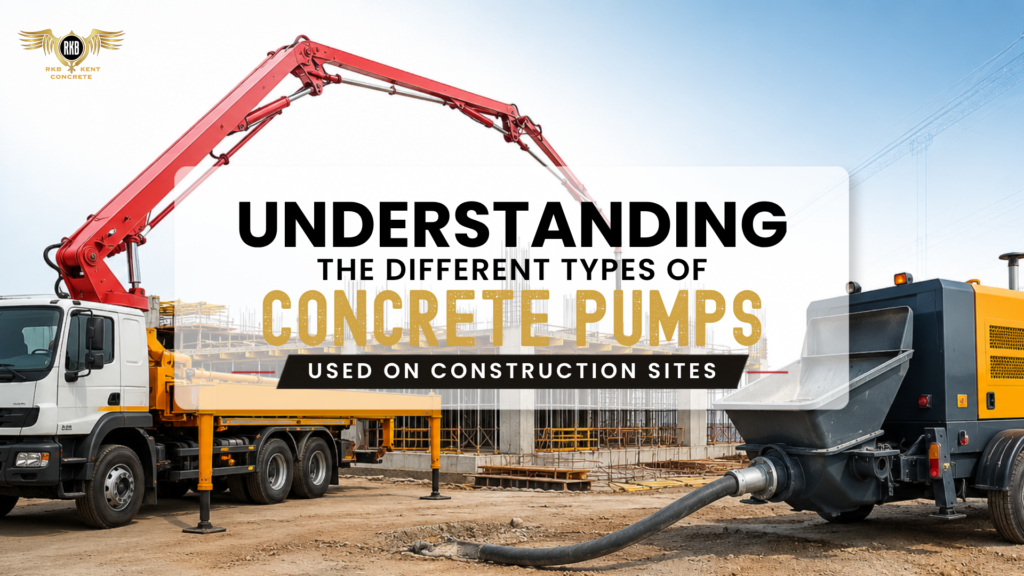
Understanding the Different Types of Concrete Pumps Used on Construction Sites
Have you ever stood on a building site, watching a mixer lorry arrive, and wondered why some crews use a tall robotic arm while others just roll out a long hose? In starting it may look like different ways of doing the same job, but each type of concrete pump is designed for a different purpose. If you are planning a building project, it’s completely confusing about which one you need. Choosing the appropriate pump is prominent, as the wrong pump may end up in a mess, increase project cost, and make the job slow. On the other end, if you choose the right pump, it will make the concrete reach the right place quickly and safely.
The best part is choosing the right pump is not complicated; all you need to understand is how the pump works. Some are perfect for large commercial buildings, while others are designed for small driveways, home extensions, and patios. This blog will help you to understand what the main types of concrete are, how they work, the advantages, and how each is best suited for each different project. This paper presents some of the most recent research on the understanding of the key parameters affecting concrete mobility and stability under pressure, i.e., pumpability.
Types of Concrete Pumps: The Two Main Options You Need to Know
When you move concrete from the mix lorry to the exact place where it needs to get poured, there are mainly two types of concrete to choose from, i.e., line pump and boom pump. Both pumps perform the same jobs, but their working patterns are different and designed for different projects. Further, let’s understand how these pumps work and how they are useful and then decide which one is best for the project.
Boom Pumps: The Tall Reachers
What is a boom pump?
A boom pump is a big truck fitted with a long, folding arm called a boom. This arm can stretch up, out, and over obstacles. The boom pump places the concrete at the exact place and makes the job fast and accurate. It will do the job quickly, and with that, it will save time and make sure the project finishes with speed and on a decided date.
A boom pump can be imagined as a robot with wide arms that places the concrete up high on a building or to the desired place where the workers want it. This means no physical tiring will be there, as there is no need to carry heavy wheelbarrows and buckets around the site.
Boom pumps are the top choice for big building projects. They are perfect for jobs like warehouses, schools, shopping centers, bridge decks, and multi-story buildings. If your site is large, tall, or spread out, a boom pump earns every penny of its hire cost because it moves a huge amount of concrete quickly and places it with pinpoint accuracy.
Line Pumps: The Space Savers
What is a line pump?
A line pump, sometimes called a static or trailer pump, is a smaller, compact unit that pushes concrete through a chain of steel pipes or rubber hoses. Rather than a tall arm, it relies on hoses laid along the ground, over fences, or through doorways to reach the pour point.
Line pumps shine in tight spots. Picture a rear extension slab on a narrow terraced street, with no room at all for a big lorry to park up. A line pump sits neatly on the pavement, a hose runs over the fence, and the pour gets done cleanly and quietly. Line pumps handle around 15 to 50 cubic meters of concrete an hour, which suits smaller, more controlled pours. They can also manage thicker mixes, such as screed, grout, and foamed concrete, which many boom pumps cannot handle.
Key Differences Between Boom and Line Pumps
The differences between these two types go beyond simple size. They are crafted for choosing the right type of construction work, and choosing the right ones can end the project in a smooth finish. Pour volume, site access, and the type of mix you need all shape the right choice for your job.
Boom pumps offer great reach and speed, making them ideal for large, open sites with plenty of room for a lorry. Its long arm can reach high buildings, wide construction sites, and places that are hard to access. It works on large open sites where a lot of trucks can be easily parked.
Line pumps are designed for smaller projects and places that have narrow space. offer a compact footprint and hose flexibility, making them ideal for tight residential streets, gardens, and spaces a large truck simply cannot reach.
Getting this choice wrong on booking day is an avoidable problem that can delay your job before it has even begun. That is why it pays to think it through early, rather than leaving it to the last minute.
How to Choose the Right Pump for Your Site?
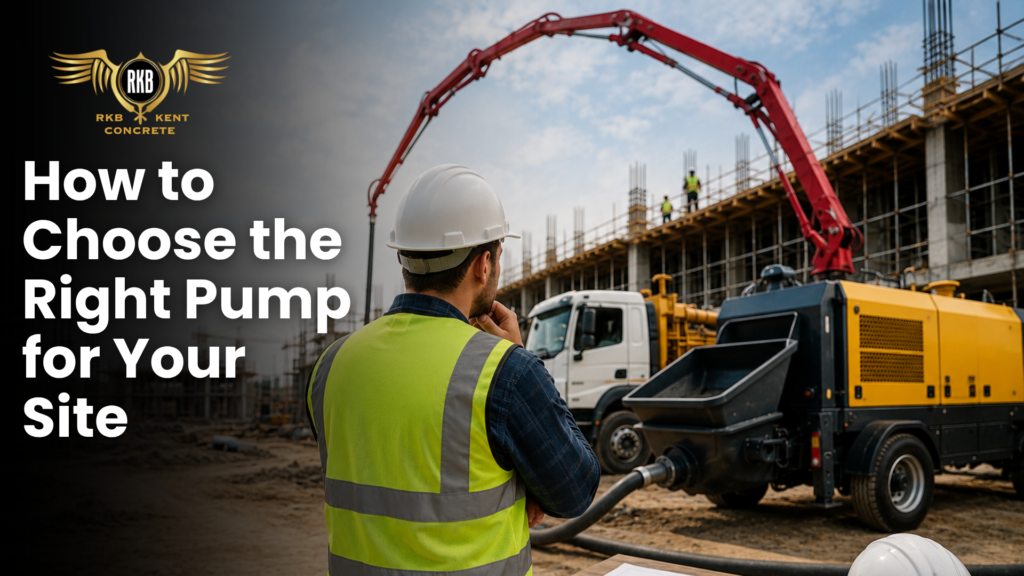
So, how do you decide? Ask yourself one simple question: can a large lorry comfortably reach the pour point? If the answer is yes, a boom pump is worth considering. If access is tight, narrow, or awkward, a line pump is almost certainly the smarter call.
It also helps to think about your mix. If you need a thicker mix like screed or grout, a line pump tends to cope better. If you need to move a large volume of standard concrete quickly across a big site, a boom pump wins every time.
Still unsure which one suits your project? That is completely normal, and it is exactly why speaking to a pumping expert before you book can save you a headache later.
Conclusion
If you are building anywhere across Gravesend, Dartford, Maidstone, or the wider Kent and South East area, RKB Kent Concrete Ltd. can help you pick the right type from our full range of concrete pumps for your project. We offer both boom pumps and line pumps, with same-day, next-day, and even nighttime slots, fair concrete pump hire costs, and friendly expert support from your first phone call right through to the final pour. Do not let the wrong pump slow your build down, cause site delays, or push your hard-earned budget off track. Get in touch with RKB Kent Concrete Ltd. today, tell us all about your site, and let our friendly team match you with the perfect pump for the job.
FAQs
Q. What types of concrete pumps are available?
There are two main types: boom pumps and line pumps. Boom pumps use a tall folding arm for big, high, or wide sites. Line pumps use hoses and pipes for tighter, smaller spaces.
Q. What is a boom pump?
A boom pump is a truck with a long folding arm that places concrete accurately at height and distance. It suits large buildings like warehouses and multi-story blocks.
Q. What is a line pump?
A line pump is a compact unit that pushes concrete through hoses and pipes. It is perfect for small, tricky spots like narrow streets or back gardens.
Q. How do I choose between boom pumps and line pumps?
Check if a lorry can reach your pour point. If yes, a boom pump often works well. If access is tight, a line pump is usually the better, smarter choice.