
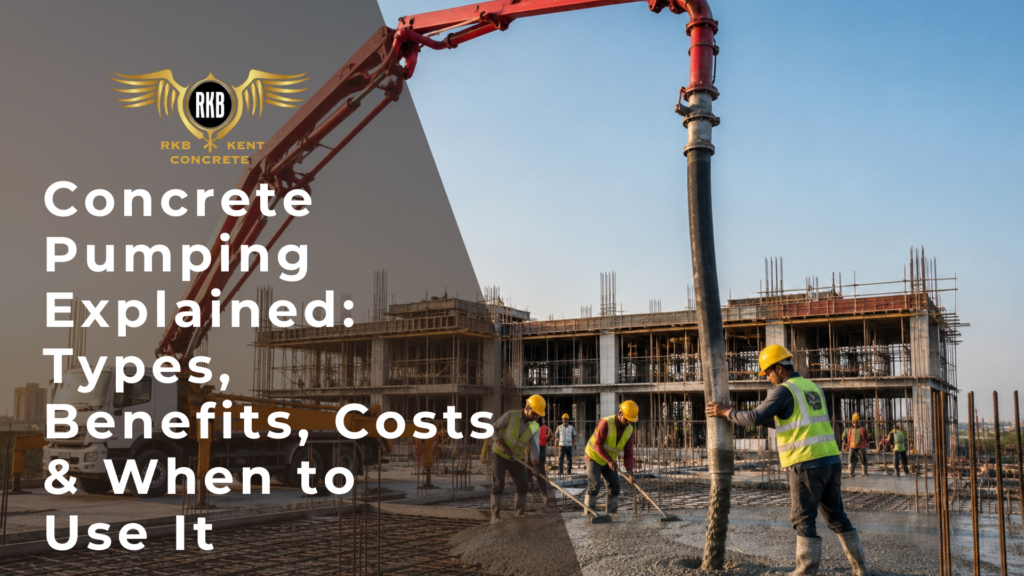
Concrete Pumping Explained: Types, Benefits, Costs & When to Use It
Table of Contents
Concrete work sounds easy until and unless you actually have to move wet concrete across the site. Have you ever imagined standing at your garden gate with a wheelbarrow, staring at wet concrete going hard by the minute, wondering how you’ll ever get it round the back before it sets? In concrete every minute is important, as it gets harder as soon as it’s mixed. Pushing heavy wheelbarrows is tiring and can easily convert a quick job into a stressful and tiring one. Here concrete pumping comes in. A wide variety of additives and admixtures are incorporated into modern concrete for sustainable development. The performance of modern concrete is rather complex, and its pumping behavior differs significantly from that of conventional concrete, especially in the fresh stage.
Concrete pumping is one of the most essential and convenient ways of placing concrete, as it reduces time, costs, and physical work and keeps the site cleaner. The builders and contractors everyone chooses this option for their projects, as it does the pouring faster and more efficiently. Once you understand this method, you’ll choose this instead of traditional pumping techniques. This blog helps you to understand what concrete pumping is and how equipment works and to learn about the costs and benefits it offers. By the end, you’ll have a clear understanding of why concrete pumping has become the preferred choice for so many building and landscaping projects.
Concrete Pumping: What It Really Means
Concrete pumping is a simple and easy way to move the wet concrete from the mixer lorry to the place where it needs to be poured. Think of it like a large hose that carries the concrete quickly and neatly, without the need for wheelbarrows or heavy manual work.
The concrete travels via pipes so it can be easily reached at the place where it is hard to access. This method is very beneficial in scenarios like pouring is far from the road or it’s hard to reach. As it travels via pump, it goes continuously without stopping; because of this, the mix stays smooth and consistent.
As there will not be a usage of a wheelbarrow like earlier, physical strain will be reduced. Concrete pumping is a reliable and efficient way to move wet concrete where you want it and also reduces time and cost and results in a better and qualitative finish.
How Does Concrete Pumping Work?
The process of moving wet concrete to the place exactly needs to be poured. Instead of opting for traditional methods like wheelbarrows and concrete pumps, a special technique pushes mix through long steel pipes. The pump creates steady pressure, which keeps the concrete moving until it reaches the pour point. This allows the concrete to travel long distances or reach places that would otherwise be difficult to access.
An expert operator will be there to monitor the pump and make sure the mix gets poured to the exact place where it needs to be done. The pump makes the job easy by making it travel to narrow spaces, upper floors of buildings, etc. As concrete travels through the pipe, there will be less mess, and the site will be clean and tidy. Concrete pumping is the best way to keep the project running effectively and efficiently.
Types of Concrete Pumps You Can Hire
There are two main types of concrete pumps, and choosing the pump will depend on the different jobs.
- Boom pumps use a long mechanical arm that bends at several points, reaching over walls and obstacles with real precision. They can deliver a large amount of concrete every hour, which makes them perfect for big jobs like warehouse floors, bridges, or multi-story buildings.
- Line pumps are smaller, trailer-mounted units that push concrete through flexible hoses. They’re compact enough to fit down narrow paths and tight gaps, making them ideal for garden extensions, driveways, and smaller residential pours. They also handle thicker mixes, like screed, better than boom pumps can.
A trusted concrete pump hire company will help you work out which type suits your site before booking, so you’re not paying for more machines than you actually need.
When Should You Use Concrete Pumping?
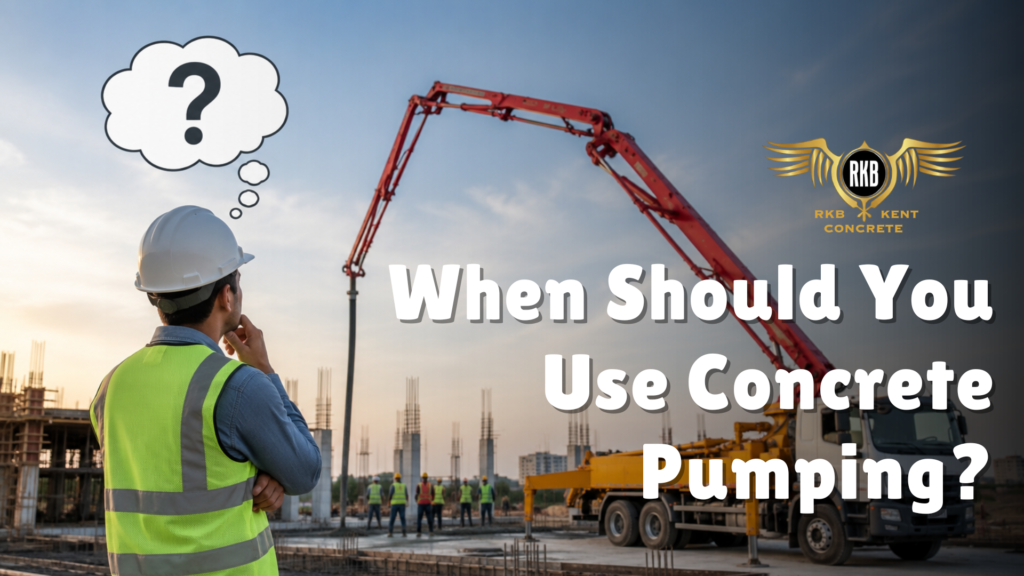
For instance, if your property has a narrow side path, a fenced garden, or a long driveway, or if the concrete needs to be poured on an upper floor, a concrete pump can easily deliver it to the right spot. Concrete pumping is the best choice if you choose it to make your concrete reach narrow spaces or places that seem difficult to access.
It also helps in keeping the process speedy as it keeps moving and doesn’t stop to dry out between wheelbarrow trips. This helps stop the concrete from starting to dry before the whole area has been poured. In simple terms, if the concrete lorry cannot get close enough to the pour area or if the job is too big, too far away, or too difficult to do by hand, concrete pumping is the easiest, fastest, and most efficient solution.
Is Concrete Pumping Better Than Manual Pouring?
In most cases, concrete pumping is best. If you’re doing manual pouring, then workers have to move heavy weight manually using buckets and wheelbarrows. This results in time-consuming, physical stress and is difficult in the cases where the site is uneven or busy.
As concrete pumping reduces the work by moving the concrete exactly to the pour location. And the best part is it creates less mess, as concrete is delivered with consistency and smoothly with little spillage. For small and easy projects, pouring concrete by hand may still be a suitable option. However, if the job is large, the access is difficult, or the work needs to be completed quickly, concrete pumping is usually the faster, easier, and more efficient choice.
How Much Does Concrete Pumping Cost?
There’s no single fixed price; it depends on the job done. The final cost usually depends on the type of concrete pump being used, how far the concrete needs to be pumped, and how easy or difficult it is to access the site. For instance, a small project using a line pump will be more economic and affordable than a large, big commercial project using a boom pump.
The best thing is the professional and expert concrete pumping contractors share the project cost with you at the start only; there will not be any surprise charges in the future. Before booking, it’s always a good idea to ask for a detailed quotation with a breakdown of the costs. This helps you avoid unexpected charges and makes it easier to plan your budget.
Why Choose Professional Concrete Pumping Contractors?
Booking through experienced concrete pumping services, with a concrete pump, you’re getting a skilled team that knows how to finish the project as per the scheduled time. They will inspect the site, plan the best concrete, and make sure things run smooth and consistent. Many concrete pumping companies also offer same-day or next-day service, which is helpful if your project is on a tight schedule or needs to be completed quickly.
Choosing a reliable contractor helps in saving time. Waste and finish things without delays. It also helps ensure that the concrete is placed correctly, giving you a smoother, stronger, and better-quality finish. With the right team, your concrete pour becomes faster, easier, and much less stressful.
Conclusion
Concrete pumping takes the hardest part of a building job by moving the wet concrete from the lorry and pouring it into the place where it is needed. With that, it also makes the overall process simple, fast, neat, and precise. Whether you’re pouring a driveway, an extension, or a full commercial slab, selecting the right pump for your project makes you save time, cost and also helps to deliver the project as per the schedule in a qualitative way. If you’re looking for professionals or expert advice in planning your project then, get in touch with RKB Kent Concrete today. Visit www.rkbkentconcrete.co.uk to book reliable concrete pumping services and get your free, no-obligation quote.
FAQs
1. What is concrete pumping?
Concrete Pumping is the simple process of moving the wet concrete from the lorry to the place exactly where you want it to get poured, instead of crying manually by hand or using wheelbarrows.
2. How does concrete pumping work?
A pump unit pushes concrete through connected pipes or hoses, with an operator guiding it precisely to the pour point.
3. When should you use concrete pumping?
Use it for large pours or sites with tricky access, like narrow paths, fenced gardens, or upper floors a lorry can’t reach.
4. How much does concrete pumping cost?
The cost depends on the pump type, distance, and site conditions, so it’s best to get a clear quote before booking.
Citation:
https://www.jstage.jst.go.jp/article/jact/18/6/18_352/_article/-char/ja/