
What Is Concrete Cancer? Causes, Signs & Prevention
Table of Contents
Have you ever walked past your balcony, driveway, or parking area and noticed rusty cracks spreading like a spider web across the surface? Initially, the damage looks small, and the homeowners don’t consider it a serious issue, as the damage is tiny and harmless. But with time, it may lead to a serious issue as the cracks grow and cause concrete cancer. The most common and serious cause of deterioration in structural concrete members is due to corrosion of reinforcing steel induced by chloride ion ingress into concrete.
We have seen families ignore tiny wall cracks at first, which makes their repairs costly and a serious safety issue. The fear is that it can weaken the areas of your home and create risk for your family, cars or daily spaces. That is why understanding concrete cancer at an early stage matters more than most people realise.
In this blog, we will explain what causes this hidden damage, how to spot the warning signs, and what simple steps can be taken to stop the problem before it spreads. If you want to protect your home from concrete issues, save money, and avoid stress in the future. In this blog, we suggest you keep doing regular inspections to keep your property safe.
Concrete Cancer: What causes concrete cancer?
Concrete cancer is the deterioration of reinforced concrete caused by the corrosion of steel bars embedded inside the concrete. When steel rusts, it expands and puts pressure on the surrounding concrete. This pressure causes the concrete to crack, swell, and eventually break apart.
The damage often starts hidden beneath the surface, making it difficult to detect in the early stages. By the time visible cracks appear, the internal corrosion may already be severe.
For instance, you’ll see an old building full of cracks on walls and rooftops because of its delayed maintenance. Small cracks were ignored until large chunks of concrete began falling from ceilings and walls. Most of the houses face blocked drainage pipes, which trap water and end up creating moisture problems
What are the Signs of Concrete Cancer?
Concrete cancer is a hidden damage that becomes visible late, which is why many homeowners fail to notice the issue becomes serious.
Cracks in Concrete Surfaces: One of the earliest signs is visible cracking in:
- Walls
- Balconies
- Ceilings
- Driveways
- Parking structures
These cracks may begin as minor fractures but eventually increase over time..
Rust Stains: The appearance of brown or red rust stains on concrete surfaces indicates that the steel inside is rusting.
Swelling or Bulging Concrete: As steel inside concrete starts to rust, it takes up more space than steel. As the expansion happens, it pushes concrete outwards. Over time, the surface will become cracked or swell.
Concrete Spalling: Concrete spalling is the breakage in the concrete surface, which also shows the steel reinforcement. Concrete spalling appears as cracking, chunks falling from walls, roofs, and balconies. In building, it is a major safety issue as there is a chance that loose concrete can fall unexpectedly.
Dampness and Musty Smells: Persistent damp areas, moisture patches, or musty odors may indicate trapped water behind concrete surfaces.
Hollow Sounds: If tapping a wall produces a hollow sound, it indicates that the outer layer has partially detached from the material.This condition may suggest internal deterioration beneath the surface.
How to Prevent Concrete Cancer?
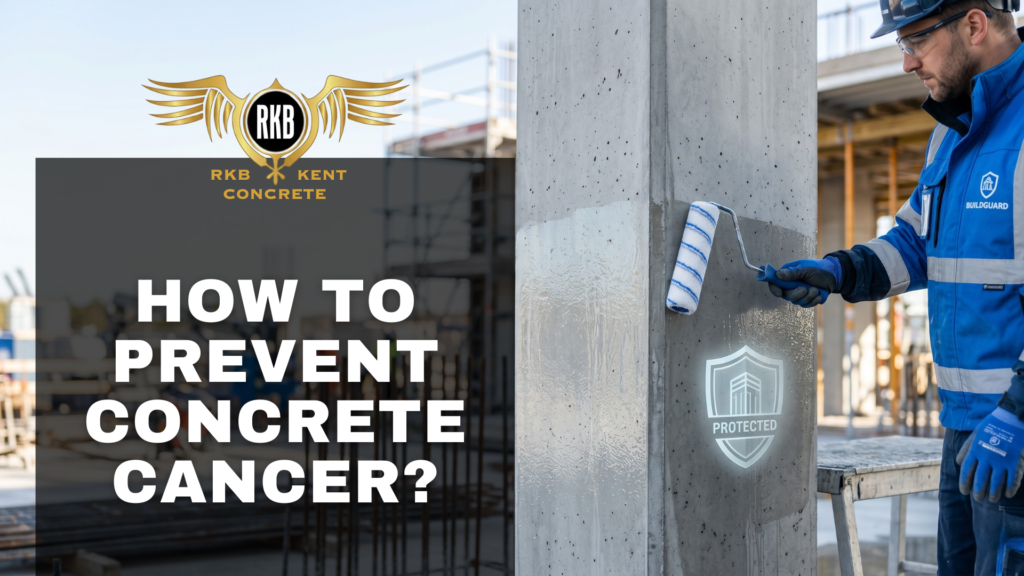
When it comes to preventing concrete cancer, it’s way cheaper than repairing the structural damage. Keeping regular maintenance and controlling moisture can lead to long-term durability.
Maintain Proper Waterproofing: Ensure that balconies, rooftops, and bathrooms are properly waterproofed to stop water penetration. The areas where water is continuously getting stand leads to most parts of the structure leaking and deteriorating.
Repair Cracks Early: Even small cracks in concrete should not be ignored when it comes to reinforced concrete structures. What initially may look like a minor defect can lead to a pathway for chemicals, weaken the structure and end up in costly repairs.
Improve Drainage Systems: Blocked drains and standing water are the major reasons for deterioration in building and concrete structures. Improper drainage can lead to accumulation of water on roofs, terraces and can increase the water penetration into concrete surfaces.
Schedule Regular Inspections: Routine inspections should be done as it helps you identify the early signs of concrete damage and deterioration happening in a building. As the damage won’t be visible to you initially and take a long period of time to get visible. By doing regular inspections, you can easily prevent damage at an early stage.
Use Protective Sealants: Protective coatings and waterproof sealants are the durable protection system that create an extra barrier against moisture and salt penetration.These protective banners help you in preserving the integrity of steel and also helps in extending the life of structure.
Importance of Regular Maintenance
Regular building maintenance can significantly extend the lifespan of your property. Small actions such as sealing cracks, checking drainage systems, and inspecting damp areas can prevent major structural problems later. Ignoring minor warning signs today may lead to expensive repairs and safety risks in the future.
Conclusion
Concrete Cancer damages homes, balconies, workplaces or parking areas long before cracks are visible late. We always advised readers not to ignore the early concrete signs, as they will lead to high repair costs and severe safety risks later. Learning what causes concrete cancer, spotting the signs of concrete cancer early, and acting quickly can protect both your property and your peace of mind. Small maintenance steps now often save families from major stress later.
If you are looking for trusted guidance, affordable concrete cancer repair solutions, and long-term building protection, RKB Kent Concrete Ltd is ready to help. Our waterproof sealants. Crack repair systems and complete restoration services are tailored to your needs. Visit RKB Kent Concrete today to learn more about concrete cancer prevention and reliable repair support for safer living spaces.
FAQs
1. What causes concrete cancer?
Concrete cancer usually starts when water and air reach the steel bars inside concrete, causing rust and expansion.
2. What are the signs of concrete cancer?
Common signs include cracks, rust stains, bubbling paint, damp areas, and pieces of concrete breaking away.
3. Can concrete cancer be repaired?
Yes. Professional concrete cancer repair can remove damaged concrete, treat rusted steel, and restore structural strength safely.
4. How to prevent concrete cancer?
Regular inspections, waterproofing, crack sealing, and proper drainage can help prevent concrete cancer from spreading.
Citations:
https://journals.sagepub.com/doi/abs/10.1179/095066001101528420